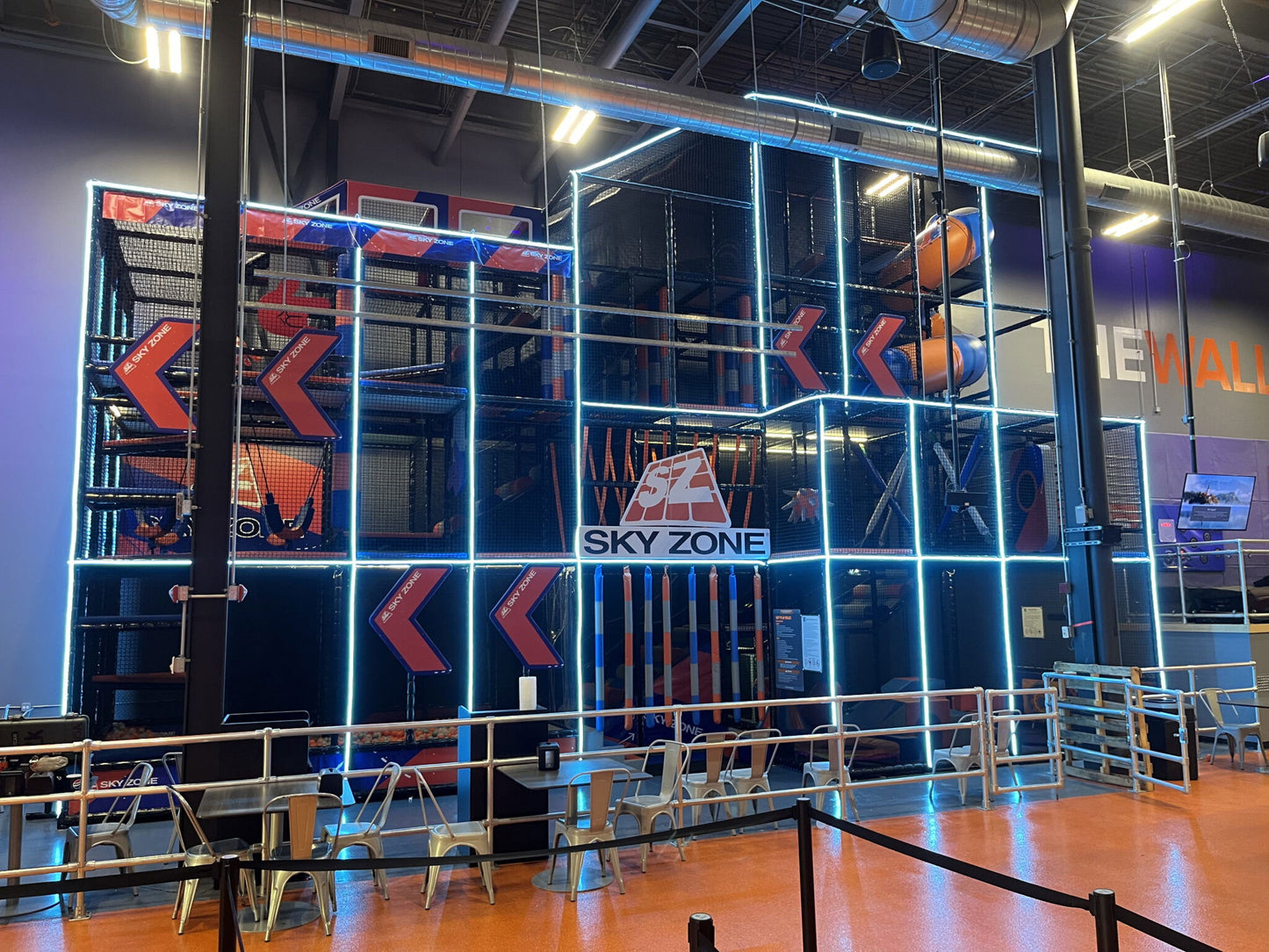
Trampoline Park Safety Starts With Landing Zone Design
How to Build Landing Zones Without “Sweet Spots” (and Handle Multiple Landings Safely)
In a trampoline park, safety isn’t just about having padding. It’s about how people land, how predictable the landing zone feels across the entire surface, and how well the system performs when you’re running high traffic—kids, teens, adults, groups, parties, and nonstop rotation.
If you operate a trampoline park (or you’re planning one), this guide will help you make smarter decisions around landing zone design, layout, and risk reduction—without guesswork.
Why incidents still happen in “well-built” parks
Most safety issues don’t come from negligence. They come from design gaps—small choices that become big problems under real-world usage.
Common risk USERS include:
- Unstable rebounds (landing and getting pushed sideways)
- “Sweet spots” (the landing feels safe only in one specific area)
- Multiple landings at once (two users landing nearly simultaneously)
- Performance inconsistency as volume increases (compression, wear, slower recovery)
- Undersized or poorly placed landing zones (wrong shape, wrong position, wrong flow)
- Poor installation by inexperienced crews (misalignment, incorrect anchoring, uneven transitions, or improper integration with surrounding structures can create hazards and increase accident risk)
A trampoline park isn’t a controlled training gym. It’s real-world chaos—different skill levels, unpredictable movement, and constant repetition. Your landing zone has to be designed (and installed) for that reality.
The “sweet spot” problem: when a landing zone is only safe in one place
A “sweet spot” is the area where a landing system feels stable—usually the center—while edges or other sections behave differently.
That’s a serious problem because:
- Users don’t always control where they land.
- Fatigue, momentum, and distractions change trajectories fast.
- Slips, missteps, and collisions happen even with good rules and staff.
Modern landing zones should feel consistent across the entire usable surface, not “great in the middle and risky everywhere else.”

What actually matters in landing zone safety (4 key variables)
When you evaluate a landing area, these four variables determine most outcomes.
1) Consistent impact absorption (anywhere landing)
The system should absorb force evenly, without hard zones, “sink holes,” or unpredictable compression. Consistency reduces awkward landings and improves confidence.
2) Rebound control
Bounce can be fun—until it becomes dangerous. The most problematic rebounds are lateral rebounds, where the user gets pushed sideways into frames, walls, other users, or off the landing area. A safer landing system reduces the “launch effect” and keeps landings stable.
3) Fast recovery for high-volume use
In busy parks, the landing zone must reset quickly. If it stays deformed or “soft” after a landing, the next user gets a completely different experience—which increases risk.
4) Safer handling of simultaneous landings
High-volume parks will always have moments of multiple landings. Your design should account for usable width and landing capacity, entry/exit points, user flow, and staff visibility. You can’t design for “perfect spacing.” You design for real traffic.
Why traditional foam pits and legacy systems create operational friction
Many parks started with foam pits or classic landing solutions because they were “standard.” Over time, common challenges show up:
- Cleanup and hygiene perception issues
- Frequent maintenance and shifting/compaction
- Inconsistent performance with heavy use
- Staff friction (more time managing the problem than running the park)
- Lower “premium” feel compared to modern park expectations
This doesn’t mean every older solution is automatically bad—but if you’re aiming to scale, reduce risk, and run efficiently, consistency and control become non-negotiable.
Quick safety checklist (audit your park today)
Use this as a simple “yes/no” check.
Landing performance
- Is it safe to land outside the center area?
- Does it reduce lateral rebound?
- Does it recover quickly between landings?
- Does it stay consistent under high traffic?
Layout and flow
- Are entry/exit paths clear per station?
- Do users cross through the landing area to move around?
- Can staff easily monitor the zone without blind spots?
Operations
- Is it easy to clean and maintain?
- Are station rules simple and enforceable?
- Can the landing zone be sized and shaped for your real space?
If you have multiple “no” answers, that’s good news—it means you have a clear opportunity to reduce risk and improve operations with smart design changes.

What “smart safety design” looks like in trampoline parks
A professional approach typically follows this sequence:
- Define the station goal
Freestyle? Dismounts? Wall tramp? Ninja? Training? Parties? - Measure real trajectories and heights
Not just ceiling height—also distance, angles, and typical usage behavior. - Right-size the landing zone
Based on actual volume, traffic patterns, and user flow. - Choose impact absorption and rebound control
Prioritize consistency across the full surface, not a single “sweet spot.” - Design entry/exit and staff visibility
Make supervision easier, not harder. - Add simple rules and signage
The best safety systems are the ones staff can enforce quickly.